

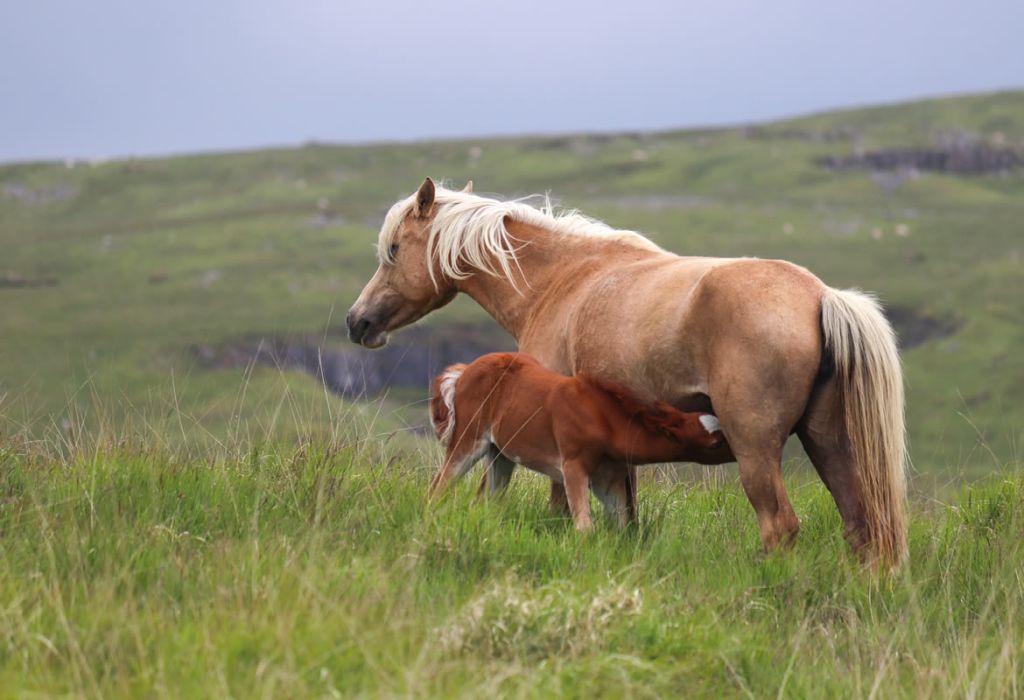
The first few months of a foal’s life are among the most delicate, the months in which most attention must be paid to itsfeedingand growth progress. Foals that are accompanied by their mothers during the suckling and weaning phase are able to manage the process of moving away from their mother’s milk almost independently.
From the first10 weeks of life, they begin to imitate their mother and taste small portions of solid food. As the days go by, they train to replace milk and achieve complete and continuous nutrition.
Today, we will find out together whatessential elementsare needed to feed the foal correctly and how to start weaning. In this way, you will be prepared for the time of foaling and be able to intervene safely and accurately.
Foal nursing
The foal begins to seek its mother’s milk already after the first15-20 minutesafter birth. The mother’s milk – especially in the first months of the foal’s life – is rich incolostrum. This specific element helps the horse strengthen its immune defences and develop the rightantibodiesagainst diseases and health problems.
It is important that the amount of colostrum taken in by the foal is very high in the first weeks of life, as it is absolutely necessary for its growth. If you notice an early estrangement from the mother or the foal starts drinking too little milk, call your vet immediately.
An expert can provide advice on the adjustment of colostrum in the foal’sfeeding(even without necessarily taking it from the mother). Usually, the suckling phase lasts for a maximum of6 monthsand follows a gradual line. The foal learns together with its mother which foods it can take and which it must avoid, gradually decreasing the amount of milk.
Weaning and feeding
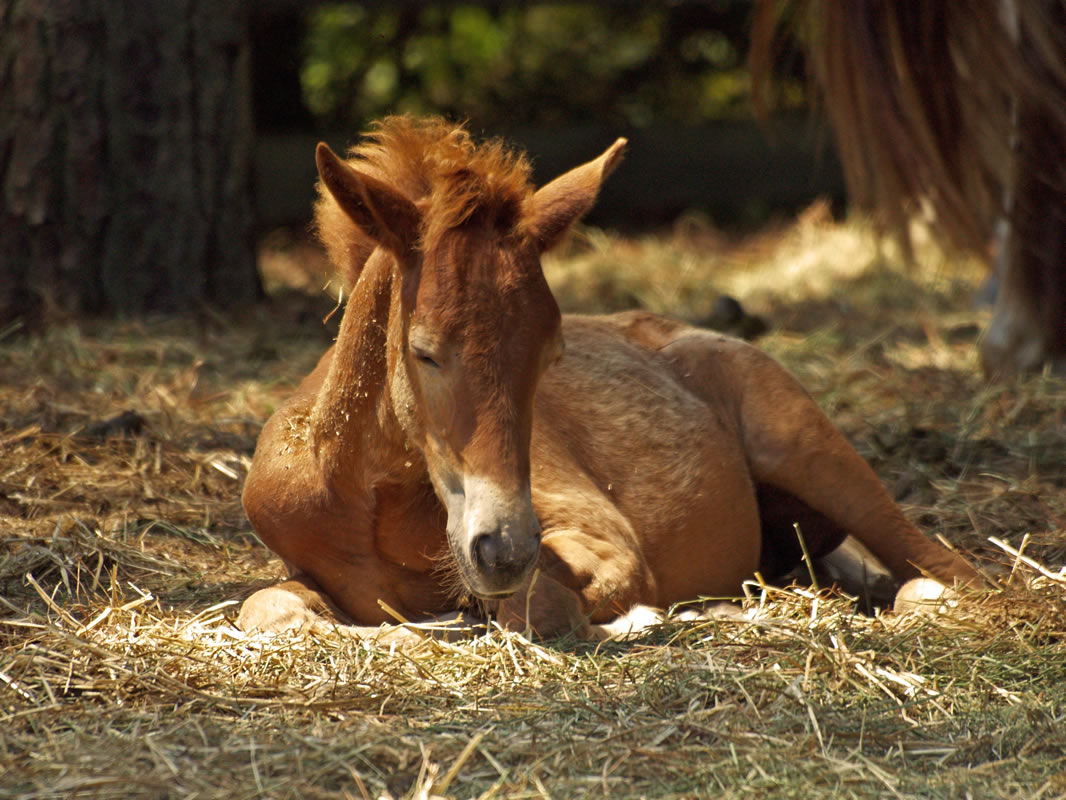
The foal’sweaningprocess follows an autonomous and regular course. As anticipated, around 10 weeks of age, the puppy begins to taste small amounts of solid food. At the same time, the mother’s milk begins to lose ‘potency’, to become less loaded withnutrients.
The foal imitates its mother’s behaviour and begins to graze grass, eating hay and cereal mash delivered by the breeders. Its diet becomes more and more varied, until it reachesfull weaning. In an average time of 6 months, the foal’s diet takes several steps forward; it goes from mother’s milk alone to the solid food normally consumed by adult horses.
The help of the broodmare
To ensure positive nutrition and growth of the horse, it is important to take care of themotherfirst and foremost. The foal’s own growth depends on her and she needs the support of her mother in order to obtain all the necessary nutrients.
Taking advantage of the modernC6EVO IoTdevice, you will be able to manage calving at every stage. Afoaling alarmtool will help you find out in advance when the bitch is about to give birth, so you can intervene immediately and without delay.
By keeping an eye on the mare’s contractions at all times, the C6EVO IoT can warn you in good time to avoid problems. Your foal will not be at risk, and you can take care of its feeding with proper attention and peace of mind.